
| Stage | What it decides | Planning use |
|---|---|---|
| Committee | The committee can release a bill with a recommendation to pass it, revise it and release it, or lay it aside. A bill not discussed in committee is effectively killed. | The earliest point to make your view known, while the bill’s fate is still open. |
| House floor | Passage by simple majority: 218 of the 435 Representatives. | Useful when you write to your own Representative and need to explain why one vote matters. |
| Senate floor | Passage by simple majority: 51 of 100 Senators. Debate is unlimited until cloture, which takes a three-fifths vote. | Expect a contested bill to need more than a bare majority to reach a vote. |
| Presidential action | The President has ten days to sign or veto. An unsigned bill becomes law after ten days if Congress is in session, and is a pocket veto if Congress is out of session. | Timing matters. Watch the calendar after passage, not just the vote. |
| Veto override | Two-thirds of the Senate and two-thirds of the House must vote in favor again. | A vetoed bill needs a much wider coalition than the one that first passed it. |
Figures from the Government Publishing Office’s Ben’s Guide and the Bill of Rights Institute handout.
Knowing how a bill becomes a law shows you where to act: it must clear committee, both chambers and the executive, and any stage can end it. State bills follow a similar route with different details.
For wider ways to take part once you know the process, see how to get involved in local politics.
Where a reader can step in
The process is a series of gates, and each gate offers a different kind of opening. Matching your effort to the stage a bill has reached usually matters more than how loudly you speak.

- Contact committee members early. A bill that is never discussed in committee is effectively killed, so committee members decide whether most bills get any further. If you care about a bill, find out which committee holds it before you contact anyone.
- Offer knowledge, not just opinion. Committees hear testimony from experts and people interested in the bill. If you have direct experience of the problem a bill addresses, that is the kind of input a hearing exists to collect.
- Go public while a bill is still pending. A published opinion reaches your representatives and your neighbors at once. Our guide on how to write a letter to the editor covers the format.
- Be realistic about the Senate. Because Senate debate is unlimited until cloture, a bill with a simple majority behind it can still stall. Ask your Senators about the votes beyond a majority, not only whether they support the bill.
- Keep paper on your side. Records such as hearing materials and correspondence can show how a decision was reached. See how to file a public records request for how to request them.
The federal path step by step
Introduction
A House bill is introduced by giving it to the Clerk of the House or placing it in the hopper, and House bills are numbered H.R. The member who introduces it is the sponsor, who is not necessarily the person who wrote the text.
Committee review
The House has 22 standing committees, each with jurisdiction over bills in certain areas, and the Senate’s presiding officer assigns Senate bills to one of its 20 standing committees. The committee studies the bill and hears testimony from experts and interested people. It then has three options: release the bill with a recommendation to pass it, revise it and release it, or lay it aside, according to Ben’s Guide.
House and Senate floor votes
In the House, a bill will usually go to the Rules Committee before it reaches the floor. Senate debate is unlimited, and a filibuster can be ended by cloture, a three-fifths vote.
Conference and enrollment
When the two chambers pass different versions, a conference committee may work out the differences. The final text becomes an enrolled bill, which the Speaker of the House signs and then the Vice President signs, before it goes to the President. Bills are also sent to the Government Publishing Office, which makes the text available digitally on govinfo.gov, as Ben’s Guide describes.
Presidential action and vetoes
The President has ten days to sign or veto an enrolled bill. If the President does nothing within ten days while Congress is in session, the bill automatically becomes law. If Congress is out of session and the bill goes unsigned, the result is a pocket veto.
A regular veto can be overridden. Each chamber must vote on the bill again, and two-thirds of the Senate and two-thirds of the House must vote in favor. That threshold is far higher than the simple majority that first passed the bill, so overrides depend on broad agreement across parties. The same pair of sources, Ben’s Guide and the Bill of Rights Institute, describe this override rule.
How state bills differ
A state legislature follows the same basic pattern as Congress. A state bill is read on the floor for the first time and assigned to its committee of jurisdiction, as this legislative process guide explains. The main structural difference is the executive step: a governor can sign the bill, veto it, or let it become law without a signature. A state General Assembly can override a governor’s veto with a two-thirds vote in both chambers.
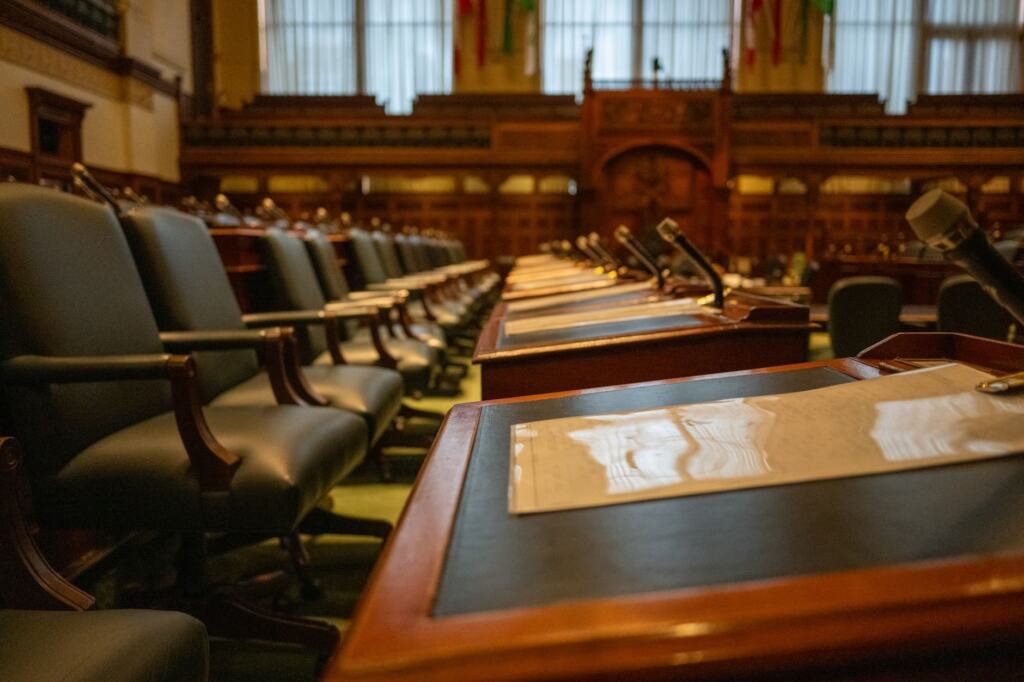
Because each state sets its own rules, treat any general description as a starting point. Chamber names, committee structures and deadlines can differ, so check your own legislature’s website before you plan around a particular step. State bills are also where a single resident is often best placed to be heard, because the committee that holds the bill serves your own region.


Tracking a bill
At the federal level, start from the bill number. The text is available digitally through GPO’s govinfo.gov, so you can read the actual language rather than a summary. Note which committee it was assigned to, since that is the first place it can stall.
For state legislation, begin with the committee assignment that follows a bill’s first reading. Look up the bill on your state legislature’s own site, read the text, and follow the committee that holds it. A bill that stops moving after assignment may be sitting in committee, which is where many bills end. If you need documents beyond what the legislature posts, the public records route above is the next step.
Frequently asked questions
Can a bill start in the Senate?
Yes. A bill can be introduced in the House of Representatives, the Senate or both chambers at the same time, according to this guide to the legislative process.
Is a bill’s sponsor the same as its author?
Not necessarily. The Bill of Rights Institute notes that the sponsor of a bill is not necessarily the person who wrote it.
Does a bill die if a committee votes against it?
Yes. If a majority of the committee votes no, the bill dies and does not continue in the legislative process, per the same guide.