
A volunteer coordinator must pick a venue fast. Decision making skills for leaders start with matching method to stakes and time: decide alone when time is short, vote on low-impact choices, seek consensus when many stakeholders must back it.
This guide sits within the wider set of leadership skills for politicians and other public-facing leaders. It is written for people running volunteer groups, campaigns and committees, where goodwill matters as much as speed.
Who should make this decision?
Most leaders default to one habit, either deciding everything or asking everyone. The better approach is to treat “who decides” as a choice you make each time. MIT Human Resources’ guide to team decision models describes several, and three of them cover most volunteer situations.
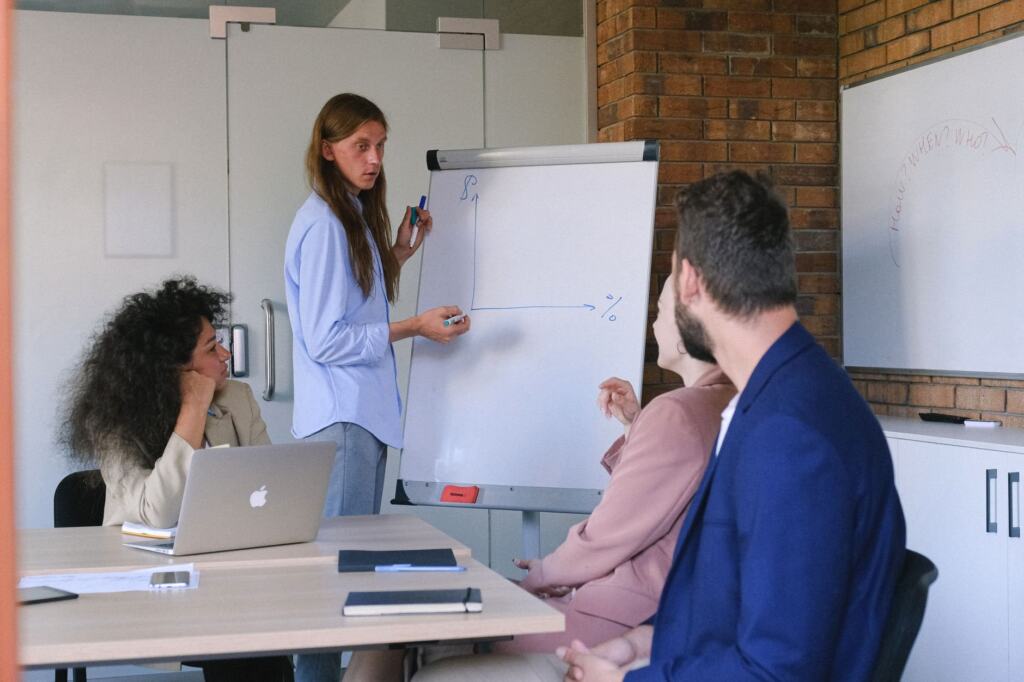
- Leader decides, then informs. MIT says this may be appropriate for time-sensitive decisions or for decisions where the team is likely to support the outcome. It suits routine logistics.
- Leader consults, then decides. The same guide says this model may be helpful where expert opinion or input is needed from the team to make the best decision. It suits choices where you lack knowledge someone in the group holds.
- Leader delegates. Once team members know any critical constraints, MIT says a leader can delegate a decision to the team. State the limits first, then let the group choose within them.
Consulting costs little when the final call stays with you. Harvard Business School Online notes that asking for peers’ input can open your mind to new perspectives. EILM’s leadership guide adds that you should consider input from stakeholders and team members, but ultimately the decision is yours. Say so up front so people know their input is advice, not a vote.
The skills that sit under every method
Whatever method you pick, the same few habits decide whether the outcome holds up. Harvard Business School Online points out that many of the decisions you face will not have a single right answer, so the skill is weighing competing claims, not hunting for a perfect option.
- Stakeholder mapping. HBS advises you to identify your stakeholders and your responsibilities to each. It names four groups for business leaders (customers, employees, investors and society) that must be balanced. A campaign or volunteer group has its own version of that list.
- Separating facts from opinion. HBS lists mistaking opinions for facts among common decision pitfalls. Ask what evidence supports each claim before the group relies on it.
- Choosing useful metrics. HBS advises that whatever the decision, you find metrics that provide insight into it. Pick a few figures that bear on the choice and ignore the rest.
- Knowing when not to default to consensus. HBS also lists defaulting to consensus as a pitfall. The next section shows when it fits.
Matching the method to the stakes and the clock
Ask how much the decision matters and how long you have. Then use the table to find the method that fits. It works as a diagnostic: find the row that describes your situation and note what to do about it.
| Your situation | Method that fits | Planning use |
|---|---|---|
| Time-sensitive, or the team is likely to support the outcome | Leader decides and informs | Decide quickly and tell people the result. |
| Expert opinion or input is needed from the team | Leader consults, then decides | Collect input first, then make the call yourself. |
| Low-impact choice | Majority vote | Vote quickly, but avoid it for values-laden questions. |
| Complex problem with many stakeholders and perspectives | Consensus | Allow time for discussion and use a structured process. |
| Critical constraints are known and the team is capable | Delegation | Set the limits, then step back. |
| Time is limited, there is an emergency, or needed information is not available | An alternative to consensus | Use a leader-led method instead of a long group process. |
The models and their conditions come from MIT Human Resources, and the conditions for choosing consensus or an alternative come from University of Minnesota Extension.
Voting or consensus when the group is split
Voting and consensus solve different problems, and mixing them up causes most of the frustration in volunteer meetings.

Majority voting
MIT says majority vote can be an effective model for low-impact decisions, but it will be less effective for decisions that touch strongly held values. Use it for dates, formats and small spending choices. Do not use it to settle a question where the losing side will feel its principles were overruled.
Consensus
University of Minnesota Extension defines consensus as a cooperative process in which all group members develop and agree to support a decision. It points to complex problems with many stakeholders and perspectives as the case for choosing it. MIT adds that consensus is achieved when everyone on the team has had ample opportunity to have their ideas considered and the team can fully support the decision. Choose it when people must carry out the result together, such as a campaign’s core message or a group’s code of conduct.
Running a consensus process
A consensus conversation needs structure. The steps below combine the University of Minnesota Extension and MIT guidance, in the order a group would normally use them.
- Plan the process with a facilitator. Extension guidance says a trained facilitator should plan the process and lead conversations to a decision.
- Open the discussion. The discussion identifies issues, clarifies questions, establishes decision-making criteria and addresses all concerns.
- Give every member a real hearing. Each person needs ample opportunity to have their ideas considered.
- Test for agreement. MIT says team members can check for consensus by seeing whether each member can agree to four statements. Put the question to each person in turn instead of assuming silence means yes.
- Confirm the agreement is genuine. MIT’s guide stresses that no team member should change their mind because they fear repercussions for disagreement.
- Set a fallback before you start. In the consensus-with-fallback model, MIT says the team pre-sets a course of action to be taken if it is unable to make a decision. Agreeing this in advance stops a stalled meeting from becoming a standoff.
Plan for the time it takes. MIT is plain that reaching consensus can take time, so reserve it for decisions that justify the investment.
Decision criteria and comparing options
Agree on what a good answer looks like before you compare answers. Extension guidance puts establishing decision-making criteria inside the discussion stage, ahead of the decision itself. Criteria set early keep the debate about the issue, not about who is more persuasive.

Once the criteria are visible, EILM’s guide recommends considering all possible options and evaluating the pros and cons of each. It also suggests using a decision matrix to compare options and prioritize them. A simple pros-and-cons list is enough for a small choice. A matrix, which scores each option against your criteria, helps when several options are close and you need to explain the result to people who were not in the room.
Making a tough call with incomplete information
Waiting for complete information is often the wrong move. The University of Minnesota Extension guidance lists “needed information is not available” alongside limited time and emergencies as conditions where consensus is a poor fit. When that happens, move to a method you control instead of stalling the group.

A practical sequence follows from the evidence:
- Gather what is available. EILM advises gathering relevant data and information that will help you make an informed decision, so collect what you can in the time you have.
- Map who is affected. HBS’s advice to identify your stakeholders and your responsibilities to each gives you a way to test the options when the facts are thin.
- Pick metrics that bear on the choice. Use the few measures that give insight, as HBS recommends, rather than waiting for a full data set.
- Decide and explain. Since many leadership decisions have no single right answer, expect to choose between imperfect options. Tell people the reasoning, so they can judge the call on its logic.
Troubleshooting common decision problems
- Everyone agrees too quickly. Agreement can hide discomfort. Ask each person directly, since MIT says consensus means no one changes their mind out of fear of repercussions for disagreement.
- The debate is running on opinions. Ask what evidence supports each claim. HBS names mistaking opinions for facts as a common pitfall.
- Every issue goes to consensus. The HBS guide warns that treating group agreement as the default for every choice is a common mistake. Use the table to keep small, urgent choices with one person or a quick vote.
- A vote split the group over values. MIT’s warning about majority vote on values-laden decisions applies. Move the question to a consensus conversation, or have a leader decide and explain.
- Priorities keep shifting. For campaign choices, the groundwork in how to create a campaign plan gives the group something concrete to decide against.
- A decision draws pushback. Once you have chosen, some people will object. The guidance on how to handle criticism as a leader covers the next step.
Frequently asked questions
| Question | Answer |
|---|---|
| Is it normal to feel stuck on decisions? | Yes. A 2023 Oracle study cited by Harvard Business School Online reports that 85 percent of business leaders suffer from decision distress. The figure covers business leaders, not volunteers specifically. |
| Can these skills be learned? | Yes. A DECA article says great decision-makers combine emotional intelligence and management skills, and that these skills can be learned and nurtured over time. MIT adds that consensus-based decision-making gets easier with practice. |
| Who counts as a stakeholder in a volunteer group? | DECA says leaders should consider the stakeholders with an interest in the organization’s activities, including members, advisors, partners and volunteers. |