| Reader situation | Milestone | Date | Planning use |
|---|---|---|---|
| Tracing the origins | Seneca Falls Convention, New York | July 19-20, 1848 | Start here for the organized beginning of the campaign for women’s rights. |
| Tracing the origins | Wyoming territory passes America’s first woman suffrage law | December 10, 1869 | Use it to show that voting rights first moved through territorial law. |
| Tracing the origins | Wyoming becomes the first state to allow general women’s suffrage | 1890, on admission as the 44th state | Use it as the state-level precedent that predates the national amendment. |
| Understanding the amendment | Ratification of the Nineteenth Amendment completed | August 18, 1920 | Use it as the national legal turning point, read alongside its limits. |
| Firsts in office | Jeannette Rankin sworn in to the House of Representatives | April 2, 1917 | Use it for the first woman elected to Congress. |
| Firsts in office | Women serving in the Cabinet and diplomatic corps | As early as the 1930s | Use it to show executive-branch access arrived early. |
| Modern breakthroughs | Shirley Chisholm in the Democratic presidential primaries | 1972 | Use it for the first major presidential bid by a Black woman. |
| Modern breakthroughs | Sandra Day O’Connor appointed to the Supreme Court | 1981 | Use it for the end of an all-male Court. |
| Modern breakthroughs | Geraldine Ferraro nominated for vice president | 1984 | Use it for the first woman on a major party’s national ticket. |
| Modern breakthroughs | EMILY’s List founded | 1985 | Use it to understand fundraising as a route into office. |
Dates and milestones in this table come from the History.com women’s history timeline and the Clio overview of women in politics.
The history of women in american politics runs from the 1848 Seneca Falls Convention to Jeannette Rankin’s 1917 seat in Congress and the Nineteenth Amendment in 1920, which did not automatically enfranchise all women.
The sections below group the milestones by what a reader is trying to understand. For the wider field of candidates and officeholders, see women in politics, and for present-day counts, see how many women are in congress.
If you are tracing where the vote began
The campaign for women’s political rights started with a meeting and then moved through state and territorial law. The two stages below explain why the national amendment came when it did.
Seneca Falls Convention, 1848
The Seneca Falls Convention was held in New York on July 19-20, 1848, with about 300 attendees. The National Archives Foundation notes that it spotlighted many contemporary women’s issues, including divorce. The Declaration of Sentiments from the convention is held in the National Archives.
This is the right starting point for anyone who wants the origin of the organized movement. It is a poor choice for anyone looking for the first vote cast by a woman, because the convention was a statement of demands and did not itself change a law.
Wyoming’s suffrage laws, 1869 and 1890
Wyoming territory passed America’s first woman suffrage law on December 10, 1869. In 1890, when Wyoming was admitted as the 44th state, it became the first state to allow general women’s suffrage.
Wyoming matters because it shows women voting under state authority long before the national amendment. That gave later campaigners a working example to cite rather than a hypothetical one.
If you need to know what the Nineteenth Amendment changed
The Nineteenth Amendment is the national legal turning point, but its practical reach was narrower than its wording suggests.
Ratification on August 18, 1920
Ratification of the Nineteenth Amendment was completed on August 18, 1920, and the National Archives Foundation gives the same date for when it officially became law. The Clio overview describes the suffrage drive after Seneca Falls as spanning seventy-two years and three generations.
For a reader asking what changed in politics, the answer is that a national guarantee replaced a patchwork of state rules for women who could already claim the franchise in their state. That is also why Wyoming’s earlier laws and the amendment belong in the same story rather than competing for the title of turning point.
What it did not do
The National Archives Foundation states that the amendment helped some women achieve suffrage, namely white women of means, but did not automatically enfranchise all women. Treat 1920 as the beginning of broad access to the ballot, not the end of the struggle for it.
If you want the first women in national and state office
Women reached office through several routes, some of them unexpected. Congress came first, followed by executive appointments and state governorships.
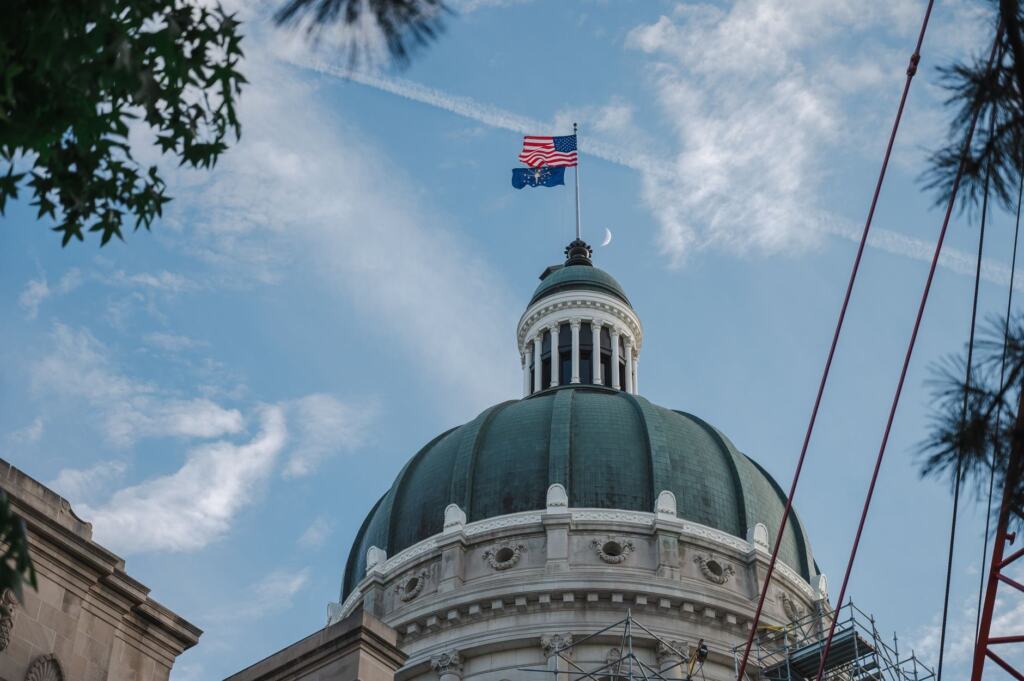
Jeannette Rankin, April 2, 1917
Jeannette Rankin was sworn in on April 2, 1917, as the first woman elected to Congress, as a member of the House of Representatives. Her seat predates the amendment’s 1920 ratification, so women’s presence in the national legislature did not wait for a national voting guarantee.
She suits readers who want the answer to who the first woman elected to Congress was. For how the chamber looks today, the statistics page linked above is the better tool.
Widow’s succession, Margaret Chase Smith and early executive posts
The Clio overview identifies widow’s succession as one of the earliest ways for a woman to enter political life, through appointment to fill a deceased husband’s term. It also records women serving in the Cabinet and diplomatic corps as early as the 1930s.
Margaret Chase Smith, who for many years was the only woman in the U.S. Senate, shows how thin women’s presence in that chamber stayed. These examples suit readers who want to understand access before organized candidate support existed. Some early officeholders arrived by appointment, not by winning an open contest.

State governors: Ella Grasso and Madeleine Kunin
Clio names Connecticut’s Ella Grasso and Vermont’s Madeleine Kunin as women governors who demonstrated prowess in state executive office. Readers looking for the first woman to lead a state should check each state’s own governor history, since this overview credits the two as examples of capability, not as a ranked list of firsts.
If you are following the modern breakthroughs
Each one below opened a specific door for later candidates.
Title VII and the 1964 Civil Rights Act
President Lyndon B. Johnson signed the Civil Rights Act on July 2, 1964, and Title VII bans employment discrimination. It belongs on this list as background: it concerns workplaces, not ballots, and it is relevant to readers asking how women’s professional opportunities widened.
Shirley Chisholm, 1972
The Clio overview records Chisholm and Mink entering the Democratic primaries in 1972, and says Chisholm broke new ground as a female African American candidate. Her campaign matters most to readers interested in how candidates from historically excluded groups can run even when a nomination is unlikely.
Sandra Day O’Connor, 1981
The Supreme Court remained all-male until the appointment of Sandra Day O’Connor in 1981, according to Clio. She is the milestone for readers interested in the judiciary rather than elected office, since she was appointed and did not run in an election.
Geraldine Ferraro, 1984
Geraldine Ferraro’s 1984 vice-presidential nomination made her the first woman nominated by a major party to its national ticket, per the same overview. It suits readers asking how far a woman had advanced in presidential politics by the mid-1980s.
EMILY’s List, 1985
Democratic women founded EMILY’s List, short for Early Money Is Like Yeast, in 1985, according to Clio. Its name points to the practical lesson: early fundraising helps a campaign grow. Readers building a modern campaign can pair that lesson with a social media strategy for political campaign planning.
Choosing which milestones matter to you
No single answer covers which women changed American politics most, because each milestone opened a different door. The right pick depends on the question being asked.
- For access to the ballot: start with Seneca Falls, Wyoming and the Nineteenth Amendment, and read the amendment’s limits alongside them.
- For entering legislatures: Jeannette Rankin and the widow’s-succession route show two different paths into Congress.
- For running for the top offices: Shirley Chisholm’s 1972 primary run and Geraldine Ferraro’s 1984 nomination are the two reference points.
- For institutions beyond elections: Sandra Day O’Connor’s 1981 appointment and the early Cabinet and diplomatic posts show the executive and judicial branches.
- For practical campaign lessons: EMILY’s List shows how fundraising networks can support candidates.
Frequently asked questions
| Question | Answer |
|---|---|
| How long was the campaign between Seneca Falls and the Nineteenth Amendment? | Clio’s overview describes the suffrage drive as spanning seventy-two years from 1848 and drawing on three generations. |
| Was a woman elected to Congress before the amendment passed? | Yes. Jeannette Rankin was sworn in on April 2, 1917, before ratification was completed on August 18, 1920, according to the History.com timeline. |
| Where can the Declaration of Sentiments be found? | It is held by the National Archives under National Archives Identifier 75316068. |
| When did women’s voting rates match men’s? | Clio reports that by 1980 women voted in the same proportion as men. |