
You have decided to run, and the next job is how to file as a candidate: sign a declaration of candidacy at the right office, pay the fee or submit a petition, and beat a fixed deadline.
- Find the office: the filing location depends on the seat, and the state election site is the safest guide.
- Check the window: deadlines differ by state and by office, so confirm the date for your seat.
- Pay or petition: most filings need a fee or a petition with voter signatures.
This walkthrough sits within the women in politics section and runs from the simplest step to the points where candidates most often get rejected. Anyone aiming at a federal seat can pair it with how to run for congress.
Find the right filing office
The office you want determines where the paperwork goes. Start with the state’s own election pages, because Project Elect Women describes the secretary of state website as usually the most authoritative source for filing deadlines and forms.
Local and state offices
Kentucky shows the pattern. Its State Board of Elections says candidates must complete the proper paperwork to put their names on the ballot, and it points candidates to the Secretary of State’s Becoming A Candidate tool for the filing documents and locations. Look for an equivalent tool or candidate guide in your own state.
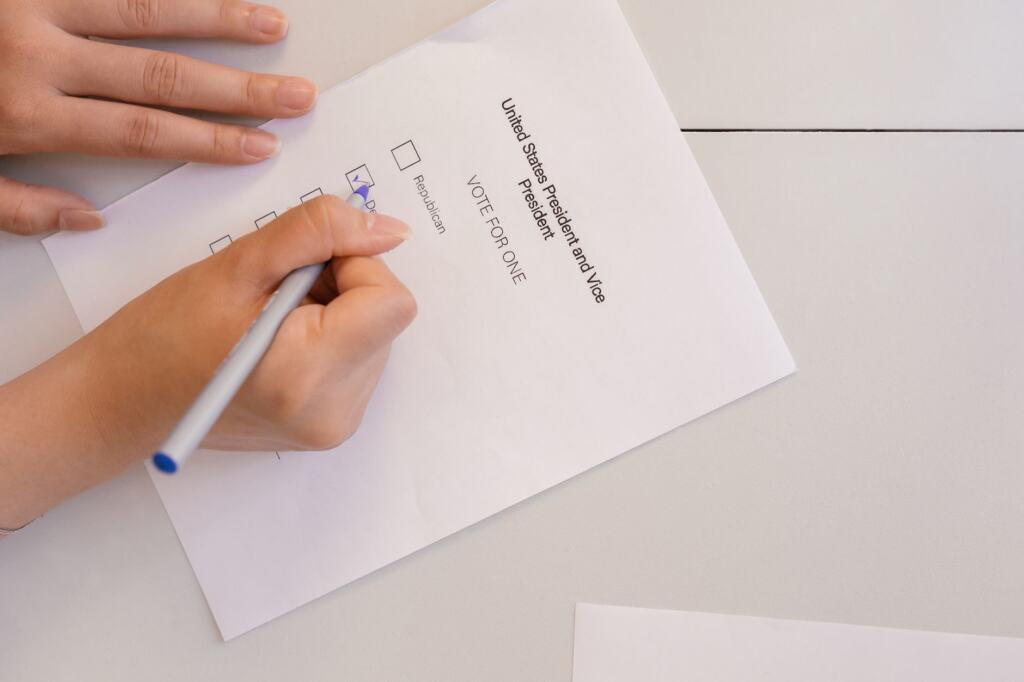
Some states add a county step before the state filing. North Carolina requires certification of registration at the county board before a candidate can file with the State Board of Elections, according to the North Carolina State Board of Elections. A candidate who skips that step arrives at the state office unable to file, so ask early whether your state has a similar prerequisite.

Federal offices
Congressional candidates still start with their state’s election pages for ballot access requirements such as signatures. The wider path to a House or Senate seat is covered in how to run for congress.
Work out the filing deadline
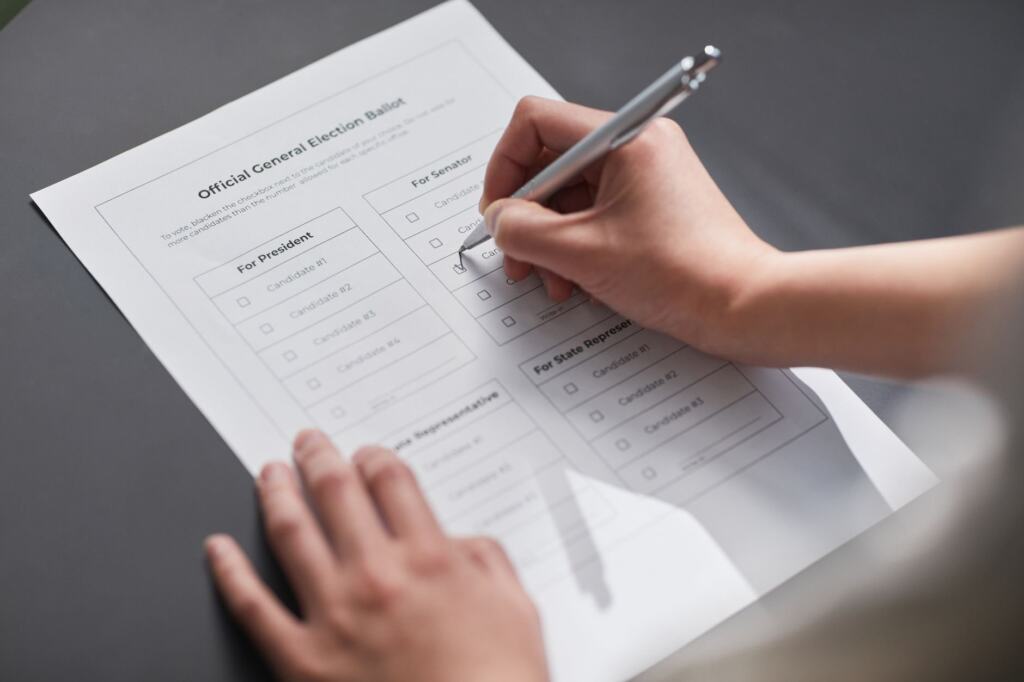
Ballotpedia notes that candidates must submit petitions, any other required paperwork and filing fees by fixed deadlines. Treat the deadline as the last moment to be fully filed, with the fee or petition included. Deadlines also differ by office within the same state, as the Florida rows below show.
| Jurisdiction and office | Filing window or deadline | Planning use |
|---|---|---|
| North Carolina, soil and water conservation district supervisor | Noon Monday, June 8, 2026 to close of regular business hours Monday, July 6, 2026 | A window, not a single day. Filing early inside it leaves room to fix problems. |
| North Carolina, municipal office (even-year elections) | July 6, 2026 to noon Friday, July 17, 2026 | The window closes at noon, so plan to arrive well before midday. |
| Kentucky, statewide offices | Jan. 9, 2026 (primary May 19, 2026) | The deadline falls well ahead of the primary, so preparation starts early. |
| Texas, statewide offices | Dec. 8, 2025 (primary March 3, 2026) | The deadline can fall in the calendar year before the primary. |
| Florida, U.S. Senate and state supreme court | April 24, 2026 | Different offices in one state can have different dates. |
| Florida, other offices | June 12, 2026 | Check which category your seat falls into before reading any date. |
North Carolina figures come from the State Board of Elections, and the Kentucky, Texas and Florida dates come from Ballotpedia’s 2026 filing deadline list.
Read the exact closing time as carefully as the date. The North Carolina rows show one window ending at close of regular business hours and another at noon. Put the closing time on your calendar, not just the day.

Complete the declaration of candidacy
The declaration of candidacy is the form that formally enters you in the race. Its name varies, and North Carolina calls it a notice of candidacy. The filing paperwork consists of that form plus a filing fee or a petition in lieu of the fee, per the State Board of Elections. The usual order of tasks looks like this:
- Clear any prerequisite. Complete a county registration certification if your state requires one before the main filing.
- Fill in the declaration. Use the current form for the exact office and district, and keep a copy.
- Attach the payment or petition. The next section explains which route to choose.
- Submit it personally. North Carolina accepts filings in person, or by mail or commercial courier if the package is received by the end of the filing period.
North Carolina does not accept a stand-in. It will only accept notices of candidacy signed and submitted in person by the candidate, or certified and sent by mail or courier. If a state allows mailed filings, build in delivery time. Filing in person during the window is the lower-risk choice, because staff can flag a problem while you are still there to fix it.
Pay the filing fee or use a petition instead
The filing fee is set for each office, so look up the figure for your seat rather than assuming a typical amount. In North Carolina, the fee for a soil and water conservation district supervisor is $5, which shows how modest it can be for a small local office.
A fee is usually not a hard barrier. Project Elect Women notes that the fee is usually waivable with a candidate petition bearing a required number of voter signatures. North Carolina’s petition-in-lieu route works this way, and Minnesota’s affidavit and petition are filed together.
Choose the fee when it is small and you are filing close to the deadline, since paying takes minutes and signature gathering takes weeks. Choose the petition when the fee is a financial strain or you want a record of local support. Either way, treat filing costs as part of the campaign budget, and use how to fundraise for a political campaign once the paperwork is in.
Collect nominating petition signatures
A nominating petition is a separate tool from a fee waiver. It is how some candidates reach ballot access in the first place. In Minnesota, minor party and independent candidates must file by nominating petition to have their names placed on the general election ballot. The signature counts below are Minnesota’s requirements by office.
| Office (Minnesota) | Signatures required | Planning use |
|---|---|---|
| U.S. Senator | 2,000 signatures | The largest requirement in this list, so it needs the longest lead time. |
| U.S. Representative | 1,000 signatures | Plan a volunteer team for collection. |
| State legislative office | 500 signatures | Manageable for a small district campaign. |
| County office | 500 signatures | This is also the figure for a petition in place of the fee. |
| Other offices | The lesser of 500 signatures or 5% of votes cast in the last general election for that office | Small electorates can make the percentage the lower, easier number. |
These requirements come from the Minnesota Secretary of State’s candidate petitions page; other states set their own thresholds, so confirm the number for your office and district.
Counts matter, but so does validity. Gather more signatures than the minimum, because any that are rejected reduce your total. Collect them from registered voters in the correct district, and follow the state’s timing rules for when signing may happen.
If you miss the deadline or make an error
The deadline is unforgiving. Project Elect Women states that this deadline does not come with a grace period, and that missing it almost always means waiting two or four years for the next opportunity. A late filing is therefore usually not a paperwork problem to repair afterwards. It ends the run for that cycle.
Errors are more survivable if caught while the window is still open. Ballotpedia advises that individuals contact their state election agencies for further information, so ask the filing office to review your packet before the window closes. The mistakes below follow from the rules covered above:
- Wrong office or location: filing where the state’s candidate tool does not direct you.
- Missing prerequisite: skipping a county registration certification where the state requires one.
- Wrong signer: sending someone else to sign, in a state that accepts only the candidate’s own signature.
- Late arrival: mailing a filing that is not received by the end of the filing period.
- Misread closing time: arriving after a noon deadline because the date looked familiar.
- Out-of-window signatures: in Minnesota, all nominating petition signatures must be obtained during the filing period.
Frequently asked questions
Is there a single national filing date?
No. Project Elect Women says there is no single national calendar, and deadlines vary by state and office.
Can petition signatures be gathered before the filing period?
It depends on the petition type. In Minnesota, signatures for a petition in place of a filing fee may be gathered prior to the filing period, while nominating petition signatures must be obtained during it.
Is the filing fee refundable if a candidate withdraws?
In North Carolina, the withdrawal deadline for a refund in the 2026 municipal cycle is 5 p.m. on Tuesday, July 14, 2026. Other states set their own refund rules.
What counts as the filing deadline?
A candidate filing deadline is the date by which a candidate must formally submit paperwork to appear on the ballot, according to Project Elect Women.