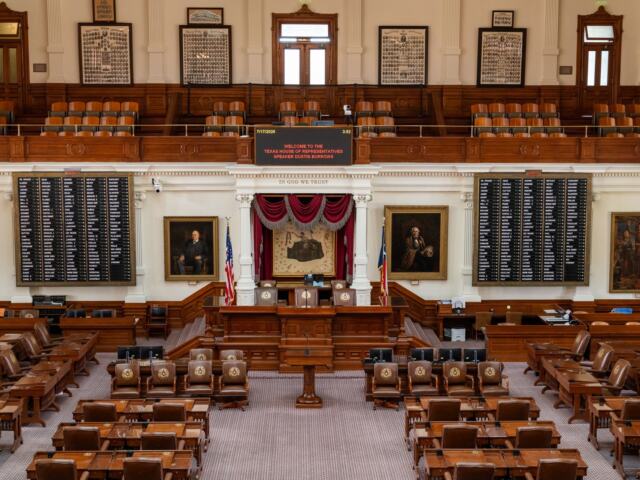
How many women are in Congress? At the start of the 119th Congress on Jan. 3, 2025, 150 senators and representatives were women: 125 in the House and 25 in the Senate.
This reference suits a first-time candidate who wants dated figures rather than headlines. The items are not ranked. They run in a fixed order, from current totals to party splits, history and governors, and each carries its date because counts move as members join and leave. For wider context, see our guide to women in politics.
Current membership counts
The US Congress is the right place to start, because every other figure here is read against the current total. Start with the combined count, then check each chamber, since the House and Senate have very different sizes and the percentages mean different things.

Total women in the 119th Congress
Women made up 28% of the 533 voting members when the 119th Congress opened on Jan. 3, 2025, a total of 150 according to Pew Research Center. That was below the record of 152 women serving at once, which was set after the 2024 special elections.
A later count differs. As of March 2025, Quorum listed 155 women across both chambers, 129 in the House and 26 in the Senate. Use the opening-day figure when you need a fixed baseline, and the later one when you want the most recent snapshot. Always quote the date alongside the number.
US House of Representatives
The House opened the 119th Congress with 125 women, or 29% of representatives, per Pew. In October 2024, The 19th described the then-current House record as 126 women, so the new House started just under that mark. By March 2025 Quorum counted 129 women in the House.
The House is the larger pool of seats, so it is where most first-time candidates will run. Its percentage is the more useful benchmark for a House race, because it reflects many districts rather than a handful of statewide contests.
US Senate
The Senate began the 119th Congress with 25 women, or 25% of senators, according to Pew. ABC News noted that the group included three newcomers. Quorum’s March 2025 count was 26 female senators.
Because the Senate is small, a single appointment or election moves the percentage noticeably. Treat Senate figures as a statewide-race benchmark, and avoid comparing them directly with House shares.
Party breakdown of women members
The Democratic Party and Republican Party contribute very unevenly, and the gap is clearest when you look at each party’s share rather than raw counts.
Both chambers combined
The 119th Congress opened with 110 Democratic women and 40 Republican women across both chambers. In share terms, women make up 42% of congressional Democrats and 15% of congressional Republicans, Pew reports.
By chamber
In the House, women are 44% of Democrats and 14% of Republicans. In the Senate, the shares are 34% of Democrats and 17% of Republicans. Republican women therefore hold a slightly larger share of their party in the Senate than in the House, while Democratic women hold a larger share in the House.
Quorum’s March 2025 count gives the head counts: of 129 women in the House, 96 were Democrats and 33 were Republicans, and of 26 female senators, 16 were Democrats and 10 were Republicans, per Quorum.
The candidate pipeline
The party gap starts before general elections. The 19th reported that women were 46% of Democratic House nominees and 16% of Republican House nominees in 2024.
Historical benchmarks
The current totals look modest until you set them against the start of the record. The long view shows both how recent most of the growth is and how much room remains.

The first women in each chamber
Jeannette Rankin was the first woman elected to Congress, winning a newly created House seat in Montana in 1916 as a Republican, according to Pew. The first woman in the Senate was Rebecca Latimer Felton in 1922, an appointment that was largely symbolic and lasted one day. For the full story behind those firsts, read the history of women in american politics.
How much of the growth is recent
Most women who have served in Congress arrived within a single generation. As of Jan. 3, 2025, 300 of the 396 women who have ever served in the House were elected or appointed in 1992 or later, and so were 48 of the 63 women who have served in the Senate. A more recent marker: at the beginning of the 114th Congress of 2015-17, 104 voting members were women, compared with 150 at the start of the 119th.
The practical reading for a new candidate is that precedent is still being set. Sitting members are often part of a first or second cohort in their seats.
Women governors
Governorships matter to candidates who plan a path through state-level office. ABC News reported that 12 women were serving as governors at the same time in December 2024, and that a record 13 women would serve as governor in 2025. It also reported that just 50 women have ever served as governors in the US, a count that included Kelly Ayotte.
Compare this with the 150 women who opened the 119th Congress. Governorships are scarce, so a woman who wins one has few precedents to follow, which is worth remembering when you read the Congress figures as a measure of progress.
Comparison of dated snapshots
The table collects the headline counts so you can see which date each belongs to and how to use it.
| Measure | Count and date | Planning use |
|---|---|---|
| All women in Congress | 150 (28% of 533 voting members), Jan. 3, 2025 | Stable baseline for the 119th Congress |
| All women in Congress | 155, March 2025 | Later snapshot; label it with its date |
| Women in the House | 125 (29%), Jan. 3, 2025; 129, March 2025 | Benchmark for House races |
| Women in the Senate | 25 (25%), Jan. 3, 2025; 26, March 2025 | Benchmark for statewide races |
| Democratic and Republican women | 110 and 40 across both chambers, Jan. 3, 2025 | Shows the size of each party’s group |
| Women’s share of each party | 42% of Democrats, 15% of Republicans, Jan. 3, 2025 | Shows how uneven the parties are |
| Record women serving at once | 152, after the 2024 special elections | Ceiling to compare against |
| Women at start of the 114th Congress | 104 voting members (2015-17) | Earlier reference point |
Figures are drawn from Pew Research Center and Quorum.
Using these numbers in a campaign
Quorum’s March 2025 count found six states with no women representing them in Washington: Arkansas, Idaho, Kentucky, Montana, Rhode Island and South Dakota, per Quorum. If you live in one of them, that gap is a concrete, checkable point for your message.
Cite the number with its date, name the chamber, and never mix a Pew opening-day count with a later one in the same sentence. Once you have your baseline, turn it into a schedule and budget with a guide on how to write a campaign plan.
Frequently asked questions
Did the record for women serving in Congress rise in 2025?
No. The record is 152 women at once, set after the 2024 special elections, and the 119th Congress opened with 150.
Why do sources give different totals?
They count on different dates. Pew’s figure is for Jan. 3, 2025, while Quorum’s 155 is for March 2025, so each number should be quoted with its date.
Who was the first Black woman elected to the Senate?
Carol Moseley Braun, a Democrat from Illinois, was elected in 1992, according to Quorum.
Which party have most women in Congress belonged to since 1992?
The Democratic Party. Pew found that 68% of women in the House and 67% of women in the Senate have been Democrats.