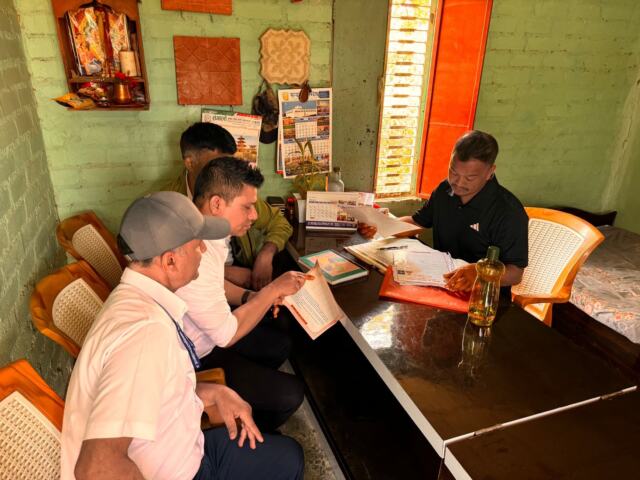
Running for office as an independent is possible in every route this guide covers, but it usually means collecting ballot access petition signatures instead of winning a party primary. Rules, deadlines and signature counts are set state by state.
First-time candidates choosing between a party label and an independent run can also read about women in politics for wider context on who runs and how.
The two ballot routes side by side
A party candidate earns a place on the general election ballot by entering a party primary. An independent candidate skips the primary and proves public support through a petition. Vermont’s 2026 calendar shows how differently the two timelines run.
| Step | Party candidate (Vermont, 2026) | Independent candidate (Vermont, 2026) | Planning use |
|---|---|---|---|
| Filing | By 5 p.m. Thursday, May 28, 2026 | Between Monday, April 27, 2026 and 5 p.m. Thursday, August 6, 2026 | The independent window opens earlier and closes much later, which leaves more time to gather signatures. |
| Primary | Tuesday, August 11, 2026 | No primary contest | A party candidate must win a primary first; an independent goes forward on petition support. |
| After the primary | Party committee nomination deadline of 5 p.m. Monday, August 17, 2026 (six days after the primary) | Not applicable | A party route has a further paperwork stage after voters choose. |
| General election | Tuesday, November 3, 2026 | Tuesday, November 3, 2026 | Both routes end on the same ballot date. |
These dates come from the Vermont Secretary of State candidate page; other states set different calendars, so confirm local dates before planning.
How a party primary works
A party primary is the election in which a party’s voters choose who carries the Democratic Party or Republican Party label into the general election. The stages run in a fixed order.
- File to run in the party’s primary. In Vermont, major party candidates file with the state by 5 p.m. on Thursday, May 28, 2026, according to the Secretary of State.
- Campaign to primary voters. The audience is the party’s electorate, not the whole district, which shapes the message and the budget.
- Win the primary. Vermont’s 2026 primary is Tuesday, August 11, 2026.
- Meet any post-primary nomination step. Vermont’s party committee nomination deadline falls at 5 p.m. on Monday, August 17, 2026, six days after the primary.
- Appear on the general election ballot. In Vermont that election is Tuesday, November 3, 2026.
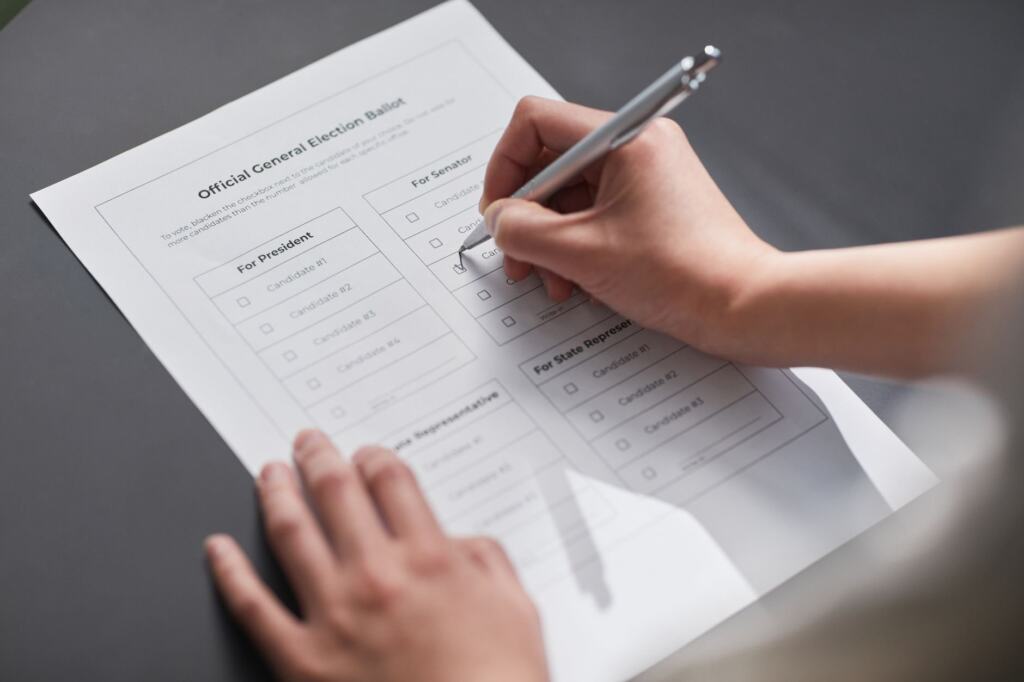
Who may vote in a primary depends on the state. The Independent Center lists Wyoming among closed primary states, which means primary rules can limit who takes part. Check the state’s own primary rules before assuming that unaffiliated supporters can vote for you.
Party endorsement and nomination
A party endorsement is the party organization’s formal backing, and it is separate from winning a primary. The Vermont schedule shows the formal side: the party committee nomination deadline comes after the primary, so a nomination can follow a primary win.
To seek backing, a candidate can approach the local party organization early, before the filing deadline, and ask what its endorsement or nomination process requires. Practices differ by party and state, so ask the party and the Secretary of State’s office what applies to the specific office. Independent candidates do not have this route, so they rely on petitions and their own organizing.
Ballot access petitions for independent candidates
An independent candidate qualifies for the ballot by filing paperwork and collecting signatures, and the number depends on the office and the state. In Vermont, independents file a consent of candidate form and a financial disclosure form, if applicable, with the Secretary of State. The same page sets these signature requirements:
- State and congressional offices: 500 signatures.
- State senate: 100 signatures.
- State representative: 50 signatures.
- Justice of the peace: 30 signatures or 1% of the city or town checklist, whichever is less.
Other states ask for far more. Ballotpedia’s 2026 state tables show these examples for governor:
- Illinois: 1% of voters in the last statewide general election or 25,000, whichever is less.
- Arizona: 3% of registered voters who are not members of a political party.
- Florida (unaffiliated): 139,492 signatures and a $5,656.00 filing fee, with a deadline of 6/12/2026.
Margins can be thin. The Independent Center reports a Montana congressional candidate who submitted roughly 7,274 valid signatures against a requirement of 7,273. The practical lesson is to collect well beyond the stated minimum, since signatures can be rejected during review.

Nonpartisan local elections and the cost of running
Many local offices are the easiest place to test an independent run, because the signature counts can be small. Ballotpedia notes that candidates must often file petition signatures or pay filing fees, so check which applies to the office.
The workload matters as much as the paperwork. Independent Center Voice advises expecting to dedicate at least 15-20 hours a week to a local office, and estimates that even a small town council race can easily cost a few thousand dollars. Treat those as advisory planning figures rather than fixed costs.

Anyone new to public life can pair this with a guide on how to start a career in politics, which covers building experience before a first filing.

Choosing between a party and an independent run
The decision comes down to which hurdle is more realistic for a particular office.
- A party route suits candidates who can win over a party’s primary voters and want the organization’s backing. It adds a primary campaign and, in Vermont, a post-primary nomination step.
- An independent route suits candidates with a strong local network and the capacity to gather signatures. It avoids the primary, but the petition burden grows quickly in large states, as the Florida and Arizona figures show.
- The label is not always plain. The Independent Center notes that some candidates described as independents run under a minor-party label but campaign on being outside the two-party system.
Ballotpedia advises contacting the state election agency for the final word on any ballot access rule, so make the Secretary of State’s office the first call. Candidates who aim at national office can look at women who have run for president to see how different routes have worked at the highest level.
Frequently asked questions
Does running as an independent mean having no party label at all?
Not always. Some candidates described as independents run under a minor-party label while campaigning as outsiders to the two-party system, so read the ballot label rules for your state.
Is a petition or a filing fee required?
It depends on the state and office. Ballotpedia says candidates often must file petition signatures or pay filing fees. Florida’s unaffiliated governor row lists both signatures and a fee.
Who gives the authoritative answer on ballot access?
The state election agency, usually the Secretary of State. In Vermont that office takes the independent candidate’s consent and financial disclosure forms.
How much should a first local campaign budget for?
One advisory estimate puts even a small town council race at a few thousand dollars, plus 15-20 hours a week of the candidate’s time. Actual costs vary by community and office.